
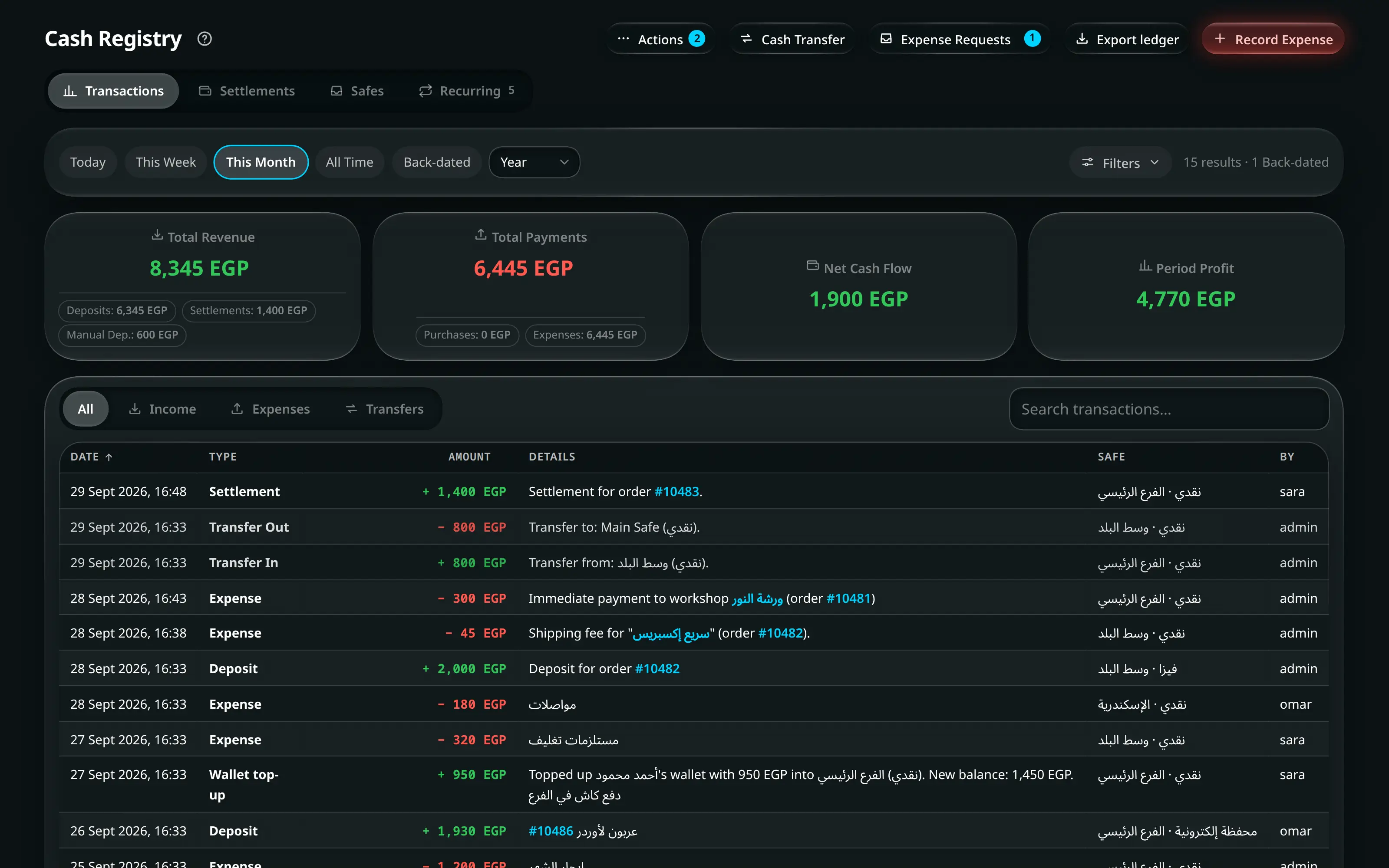
Every shop pays for small things out of the drawer: a delivery, a repair, tea, a taxi for a courier. Individually none of them matter. Together, in a month, they are the difference between the profit you calculated and the profit you have.
A request, not a note
Money leaving the business is an expense request: an amount, a category, a reason, and who is asking. It goes to whoever approves in that branch.
The important part is what happens at approval: the request is checked against the funds actually available in that safe right now, not against optimism. That is what stops the familiar situation where three people have each been told “yes” for money that only exists once.
Categories that are worth having
Keep the list short enough that nobody has to think. A category people cannot find is a category they will not use, and everything ends up in “other”.
A workable starting set:
- Deliveries and transport
- Repairs and maintenance
- Supplies and consumables
- Staff — meals, transport
- Rent and utilities
- Fees and commissions
Recurring expenses
Rent, internet, a cleaner, a subscription. Set them up once and they appear on schedule rather than being remembered — or not — on the day.
A recurring expense that has not been paid is visible before it is late, which is the only useful time to see it.
Moving cash between safes and branches
A transfer is two halves of one movement: out of one safe, into another, with a running balance on both. It is not an expense, and recording it as one is how a branch appears to be spending money it is actually just moving.
Transfers are also how the day’s takings reach the main safe after a settlement.
The integrity audit
There is an audit that goes looking for the things that quietly break a ledger: orphaned entries with no parent transaction, duplicates from a double submit, and settlements whose deposit does not match what was counted.
Run it monthly. It is much cheaper to find a duplicated expense in the month it happened than in an annual review, when nobody remembers the day.
The rule that makes all of this work
Nothing leaves the drawer without an entry. Not “I’ll add it later”, not a note on a receipt spike. The system is only as honest as the least convenient moment, and the least convenient moment is a courier standing there waiting for forty pounds.