
The point of an end-of-day count is not to catch anyone. It is to find out, every single night, whether the day is explainable — while you can still remember it.
Blind, on purpose
The person counting does not see the expected figure. They enter what is physically in the drawer, and the app compares.
That is the whole design. If the expected number is on screen, a tired person at closing time enters that number, and you have replaced a measurement with a formality. Every shop that has run a non-blind count has eventually discovered this the expensive way.
What the variance means
A difference on the first few nights is normal and almost always one of four things:
- An order taken on paper and never entered.
- A payment method not recorded — someone paid by Instapay and it was logged as cash, or not logged at all.
- Change given from the drawer for something that was not a sale.
- An expense paid out of the till without an expense entry.
Each of those is a process fix, not a discipline problem. Fix the process and the variance goes to zero within a week or two.
What the app does with it
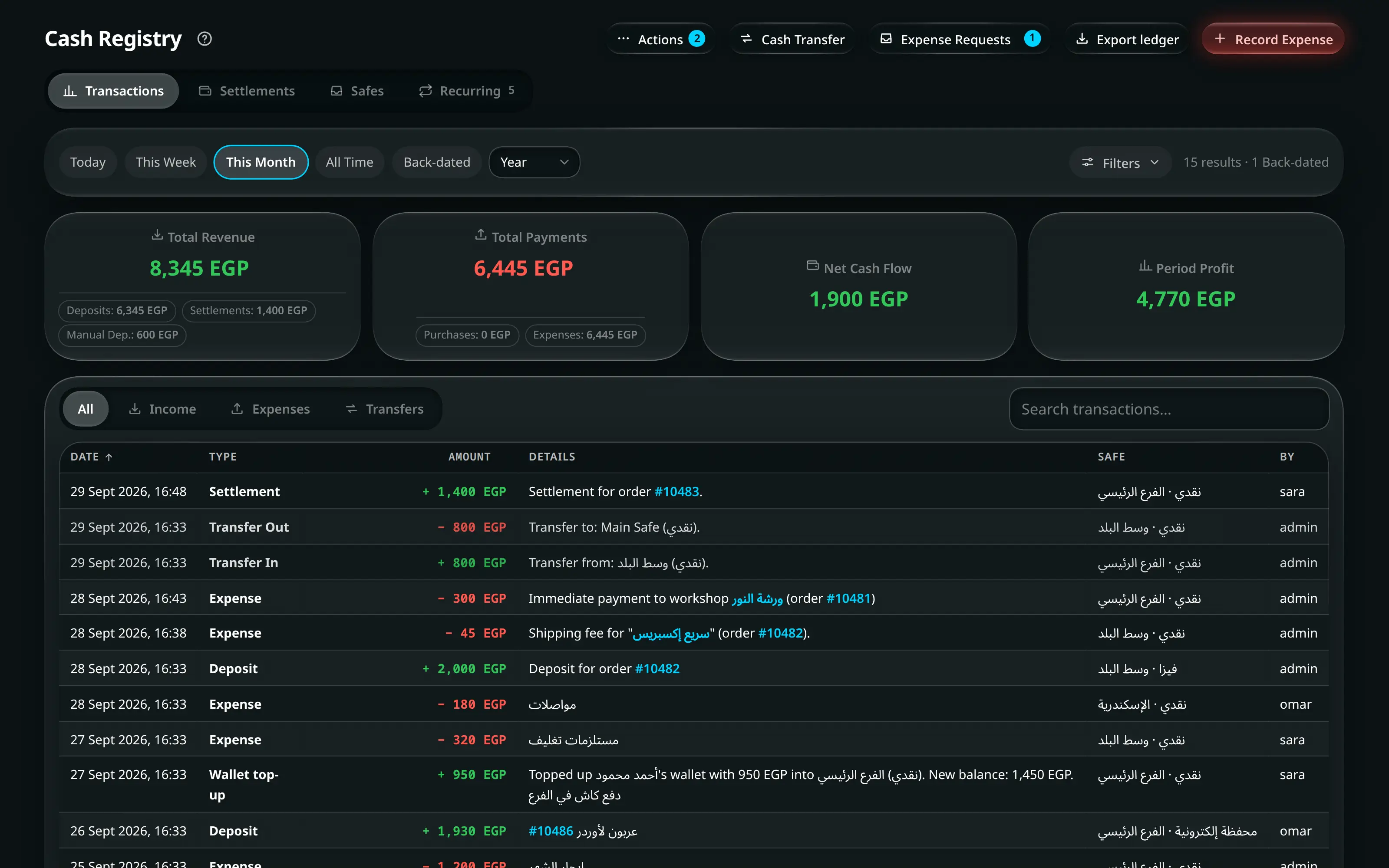
Approving the settlement books the difference — a surplus or a deficit — into the cash registry against that branch and that person, and moves the counted cash to the main safe. It is a real ledger entry, so it appears in the month’s numbers rather than quietly disappearing.
Expenses and advances
Anything paid out of the drawer should be an expense request, not a note. Requests are approved against the funds actually available, which is what stops the familiar situation where three people have each been told “yes” for money that only exists once.