
Buying is where a shop quietly loses money in both directions. Buy too little and you lose the sale you already had. Buy too much and the cash sits on a shelf for a season.
The reorder view exists so that the decision is a list rather than a memory.
What is low
The reorder view shows, per branch: what is below its reorder point, how much to buy to reach the level you set, and which supplier you last bought it from at what price.
Set the reorder point per variant, not per product. A shirt in one size sells five times faster than another, and one number for the whole product means you are permanently over-stocked in one size and out in the other.
From a supplier, or as a one-off
The books treat these differently, so the app does too.
- A supply order is placed against a supplier record. It carries agreed prices, creates a payable when it arrives, and settles against payments over time. This is how you buy from the people you buy from every month.
- A one-off purchase is a receipt from somewhere you will not deal with again. It goes straight into stock and out of the drawer.
Mixing the two is why shops end up unable to say what they owe: a payable that was actually paid in cash on the day, sitting open for months.
What you owe
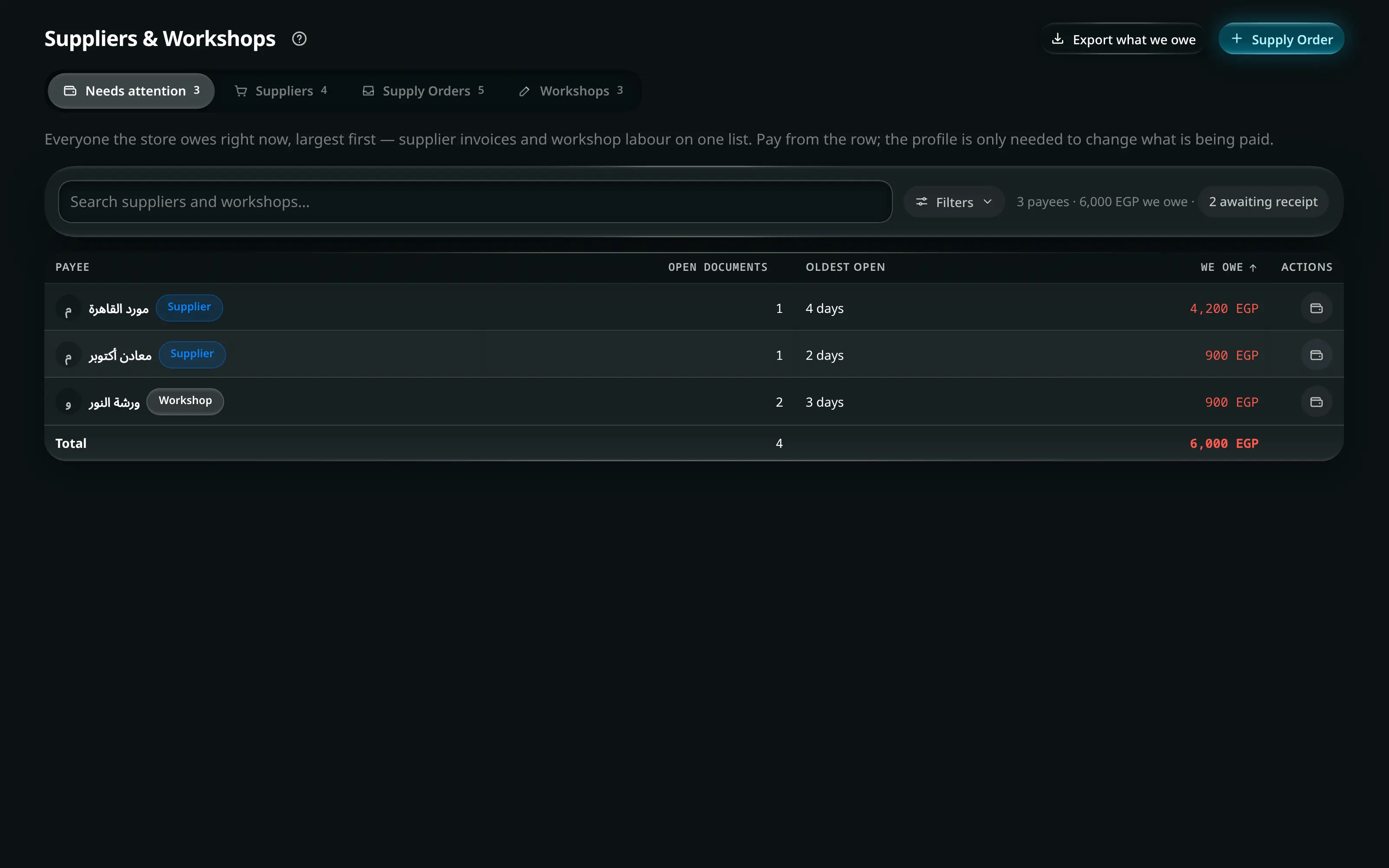
Every supply order that has arrived and not been fully paid appears in payables, with the balance and the age. That figure is the one to look at before you agree to another delivery, and it is the one most shops are guessing at.
Supplier payments come out of the cash registry like any other money leaving the business, so paying a supplier is visible in the same ledger as everything else.
Cost, and why the number moves
When stock arrives at a different price from last time, the app updates the item’s moving-average cost rather than overwriting it. That is what makes profit per order meaningful: the margin is measured against what the stock actually cost you, blended across the deliveries it came from, not against the most recent invoice.
You do not have to maintain this. It is the consequence of receiving stock properly.
A practical rhythm
- Check the reorder view on the same day each week, before you call anyone.
- Raise supply orders for everything from one supplier at once, not item by item.
- Reconcile payables at month end against the supplier’s own statement. If the two agree, both sides are keeping honest books.