
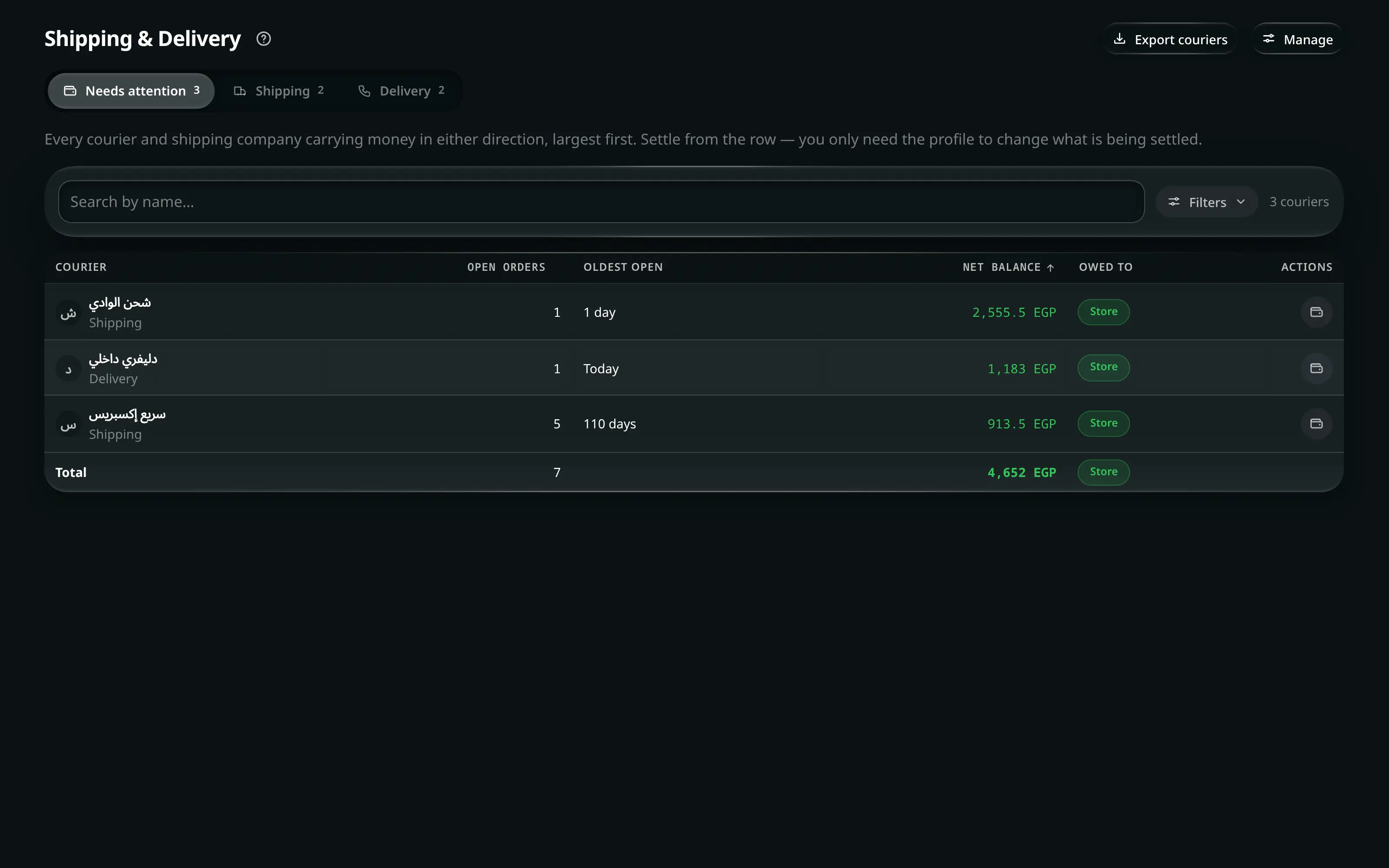
Delivery is where the money gets confusing. The courier holds your goods and your customers’ cash, sometimes for days, and the reconciliation is usually a WhatsApp thread and a calculator.
Build the run
Assign orders to a courier. The run shows, per order: the customer, the address, the amount to collect, and whether it was already paid online.
That last distinction matters more than it looks. A courier delivering a pre-paid online order collects nothing, and a run that does not separate the two produces a settlement figure nobody can check.
While it is out
Each order moves through its own status — out for delivery, delivered, failed, returned. A failed delivery is not a deleted order: it goes back into the pipeline with its reason, so the customer can be called and the item is not quietly lost.
Settling
At the end of the run, one screen shows:
- what the courier collected in total;
- the delivery fees you owe them;
- returns coming back into stock;
- the net figure changing hands.
Approving the settlement books the collected cash into the registry, books the courier’s fee as an expense, and returns any undelivered stock. One action, and the drawer, the stock and the courier’s balance all move together.
Their spreadsheet, not yours
Courier companies each have their own template and will not accept yours. Rather than retyping a run into someone else’s columns, upload their template once and the run fills it — their headings, their order, your rows.
This is a small feature that removes a genuinely miserable half hour, several times a week.
Two things worth checking every time
- The collection total against what actually arrived. A settlement approved before the cash is counted is a settlement that will not be questioned later.
- Returns are back in stock before you approve. An item that never returns to stock is one you will not sell and will not find until a count.
If you deliver yourself
The same run works with a member of staff instead of a courier company. The fee line becomes zero, the settlement is the same, and the person delivering is accountable in the same way — which is the point.